STAFF
STORY
External Affairs & Corporate Development
As a member of the GHIT Fund's External Affairs & Corporate Development department, I support the Board of Directors, which serves as the organization's decision-making body, and Council meeting operations, which are the equivalent of General Shareholders' Meetings. I handle things like preparing agenda items and providing holistic support to ensure that directors both in Japan and overseas can participate.
When it comes to external affairs, I coordinate with the Japanese government, international organizations, and domestic and foreign private sector companies and foundations. I support negotiations aimed at creating new partnerships, including procuring funding. I regularly report on the status of the funds we receive and the results of GHIT Fund activities. What's more, I listen carefully to the requests and expectations of individual companies, plan dialogues in collaboration with the Brand Communications team, and actively connect and share information with partners.
My four and a half years at GHIT Fund have taught me to think strategically beyond my own role—to stay aware of broader organizational challenges and trends, gather input from stakeholders, and help distill that into actionable information for leadership. Working closely with the CEO in a small organization where people are trusted with real responsibility, regardless of position, has given me invaluable opportunities to learn and contribute.

Prior to GHIT, I worked at Olympus Corporation, a medical device company, in domestic sales and international marketing. I joined Olympus because I wanted to bring Japan's superb technologies and products to overseas markets. I also wanted an international role. My focus at Olympus was actually quite aligned with GHIT’s mission: to use Japanese innovation and global partnerships to improve the world. I've always been determined to do whatever I can to leverage Japan's strengths around the world and contribute to society.
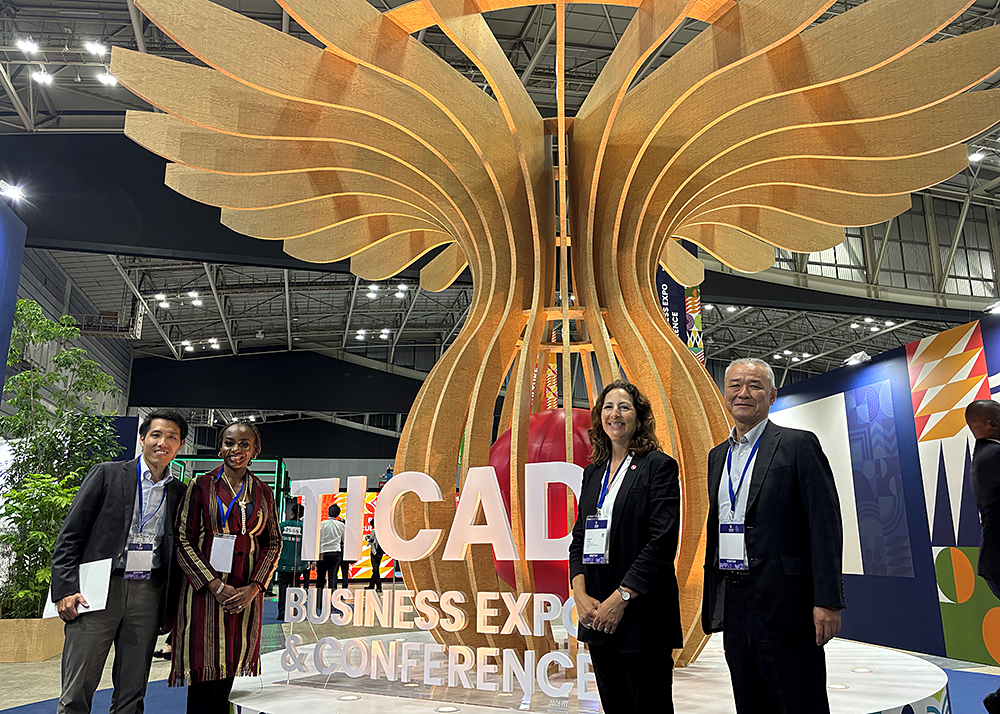
Booth tour with colleagues from the END Fund at TICAD 9
One of the things I learned from senior leaders at my former job was to always think about the positions of the people I deal with. I use that lesson all the time in my work with GHIT. The partners that provide our funding include a wide array of companies and organizations. Each has different expectations of the value that GHIT should offer, and each is involved in global health in different ways.
That's why I always listen closely to our partners’ personnel and management teams, and work with my own team on how to help our partners see the nuanced value of supporting GHIT and working on projects together.
In March 2025, it meant a lot to be able to report to our funding partners that we had delivered pediatric treatment option for schistosomiasis to preschool-aged children in Africa. This is a project that GHIT has been supporting for many years. A representative from one of our corporate partners told me "While our company wasn't directly involved in developing this product, I see this achievement as the product of the efforts of all of the GHIT Fund partners." That really stuck with me.
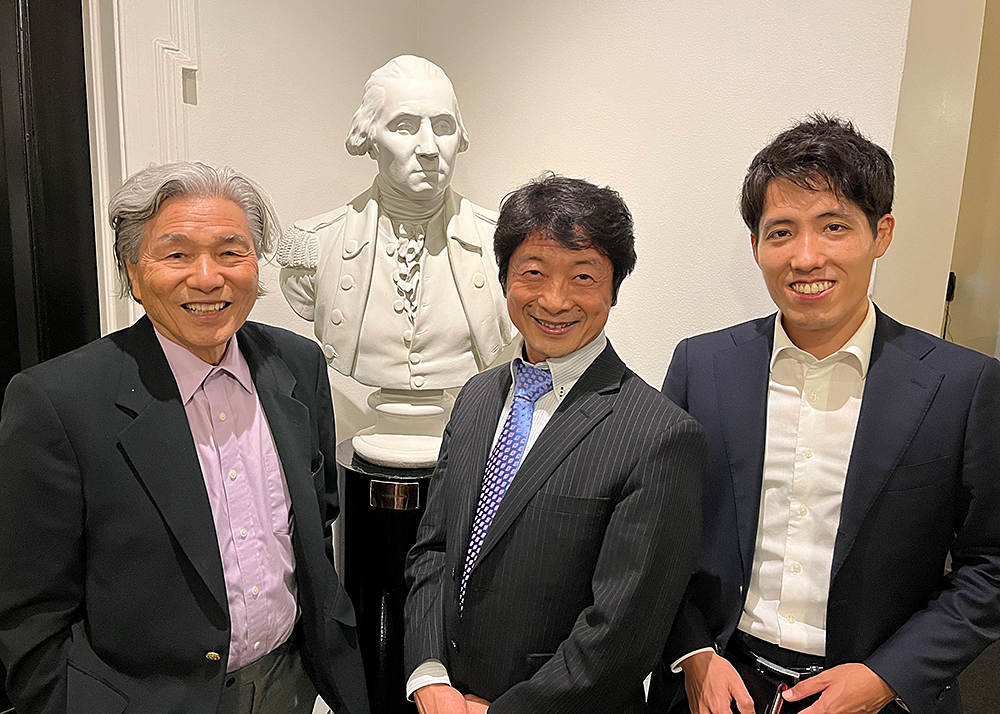
With Prof. Ko-Yung Tung, who has long served as a member of the GHIT Fund Board, and CEO Osamu Kunii
I am privileged to be able to speak directly with members of the Diet and company executives, so my day-to-day work is tremendously stimulating and motivating. As I've accompanied CEO Kunii, I've been blessed with opportunities to meet the presidents and chairpersons of over 50 companies and around 50 Diet members. These kinds of high-level dialogues are extremely important and make an enormous impact on GHIT’s governance and policies. I'm often responsible for preparing the briefing materials for them. I have a lot of responsibility, but I'm also in a position to listen to their expectations and words of encouragement. Their feedback helps us make improvements to our organization and strengthen our partnerships, which is very rewarding.
In particular, as part of our transition to GHIT 3.0 strategy, I coordinated with nonpartisan groups of legislators and related organizations on outreach and engagement with the Japanese government. This effort helped secure a USD$200 million pledge from the government to GHIT at the G7 Hiroshima Summit, a milestone I am proud our team contributed to.
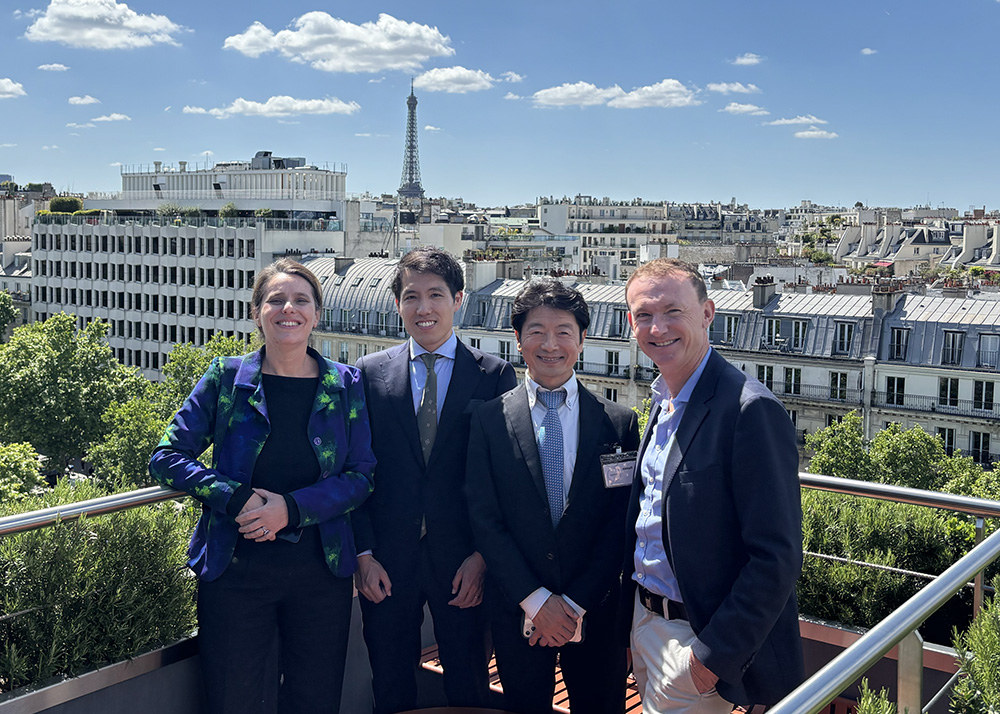
Visit to a pharmaceutical company in Europe with CEO Osamu Kunii
Having a solid grasp of frontline realities really matters when attending international conferences like the World Health Assembly to ground policy conversations in what's actually working in the field, as well as when visiting partners in the field. I recently went to an area of Thailand where malaria is endemic to visit a facility where Mahidol University is doing research and meet with members of the local community. Speaking with them directly showed me their passion and gave me valuable perspective. Seeing our work firsthand allows me to communicate GHIT Fund's impact more clearly to stakeholders.
I've also had the chance to meet product development partners in which the GHIT Fund is investing (in the form of grants). They expressed their gratitude for the investment (grants), but they were also effusive about the fact that GHIT employees are always so conscientious and attentive, working together on projects, and that the GHIT Fund connects them to other product development partners when necessary and collaboratively works to address issues that come up in the research and development process. It makes me both happy and proud to hear about the achievements of my colleagues from our partners around the world.
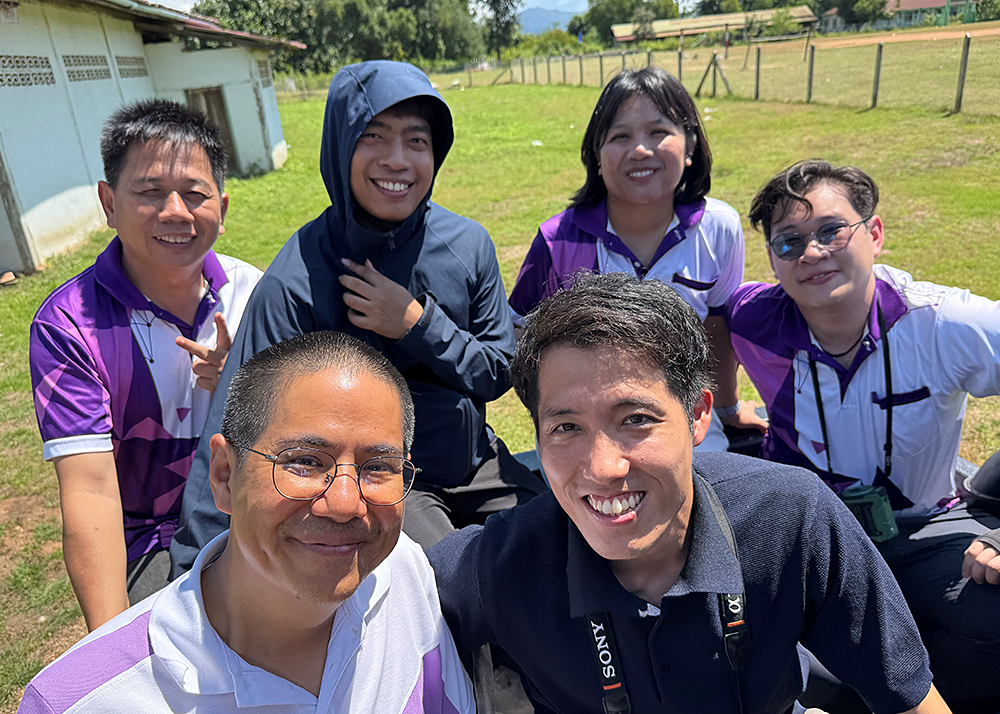
Observation of a malaria field study by the Faculty of Tropical Medicine, Mahidol University, Thailand
I visited Africa as a student and contracted malaria myself. This is part of the reason for my strong interest in global health and the urgency with which I see our mission. My symptoms appeared two months after returning to Japan. When I was diagnosed with malaria, I was prescribed medication and my symptoms immediately improved. This experience showed me first-hand that malaria is treatable with medicine. But the reality is that there are a lot of places which don't have access to that medicine. Eradicating malaria will require the creation of comprehensive measures, such as measures for ensuring access to medicine, providing preventive vaccinations, and establishing systems for early diagnosis and treatment. I've come face to face with the reality that even treatable diseases are threatening people's lives because of a lack of infrastructure, and that experience is the reason that I feel so strongly about our mission to help bring about a society in which everyone has access to appropriate medical care.
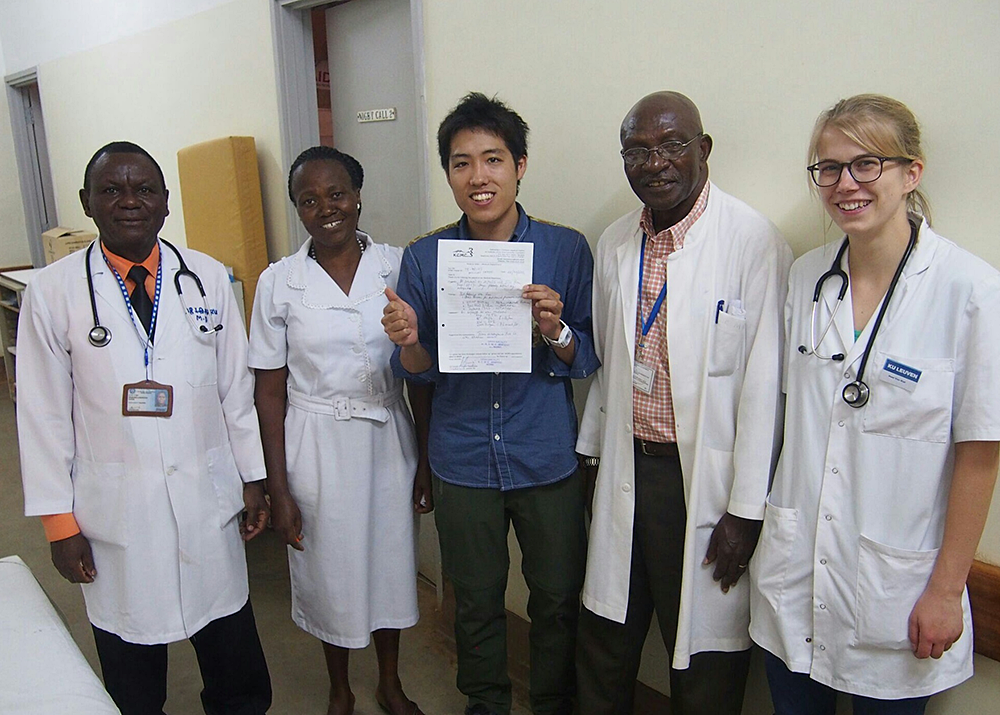
The doctors who cared for me when I fell ill in Tanzania during my student trip to Africa
Global health needs more than doctors and researchers; it needs people who can move fast, coordinate across organizations, secure resources, and solve complex problems. My background in sales and marketing at Olympus is directly relevant here. The skills you develop in the private sector – whether in accounting, planning, business development, or operations – translate directly to this work. If you're curious about global health, don't assume you need a medical degree to contribute meaningfully. I urge anyone who is interested in taking on new challenges in the global health field to come and take that first step together with us.
*This interview was conducted in October 2025.
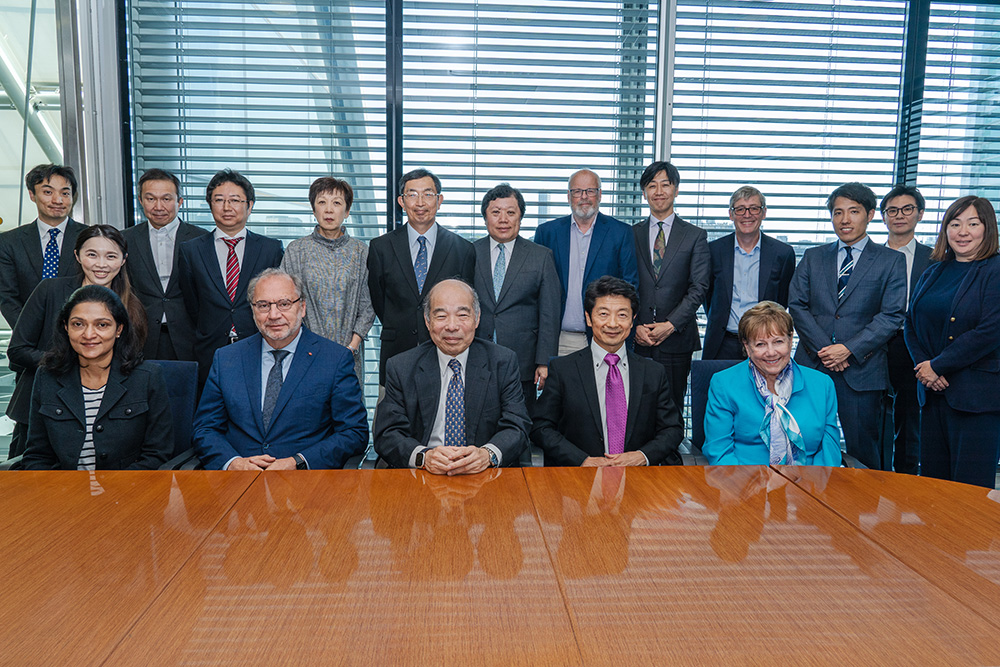
At the Board meeting held in London in June 2023
External Affairs & Corporate Development
Satoshi Horiuchi is a Senior Manager of External Affairs & Corporate Development at the GHIT Fund, managing engagement and reporting with government, corporate, and philanthropic funding partners, as well as coordinating key governance bodies including the Board and Council. Prior to GHIT, he spent five years at Olympus Corporation in domestic sales and international marketing for surgical endoscopy products. He joined GHIT in 2021. He holds a Bachelor of Arts in Law from Sophia University and an MBA from SBI Graduate School.
*Affiliation and position are as of the time of the interview.
STORY INTERVIEWS

Yukie Michelle Lloyd, PhD
Senior Manager,
Investment Management,
Investment for Impact

Satoshi Horiuchi
Senior Manager
External Affairs &
Corporate Development

Cecilia Chui, PhD
Senior Manager,
Portfolio and Access Strategy,
Investment for Impact

Mina Ohata
Manager
Investment Strategy
Planning & Management

Staff Dialogue
GHIT's Diverse Culture
A Decade of History and
Diverse Approaches to Work
*Affiliation and position are as of the time of the interview.