STAFF
STORY
Investment Management, Investment for Impact
I'm a Senior Manager with the Investment Management team, and my day-to-day really depends on the time of year. But basically, once GHIT Fund decides to fund a project, that's where our team comes in. The investment management team monitors and supports each project, and we're very distinct in that we communicate with our applicants and our partners very closely. Whenever partners run into an issue, we're there to work through it together. I've never seen a funding organization as supportive as GHIT.

I studied biomedical science at Kitasato University, then moved on to do research on immunological pathways at the Institute of Medical Science at the University of Tokyo (IMSUT). While I learned a lot doing basic research in the lab, my true interests lay elsewhere. I wanted to do something that was more translational, benefiting patients more directly.
The opportunity came unexpectedly when I saw a posting on a scholarship to study at the University of Hawaiʻi at Mānoa, celebrating the marriage of the then-Emperor and Empress of Japan. I applied for it, got selected as a scholar, and was invited to meet Their Majesties at the royal palace. The scholars, one from Japan (me) and one from Hawaiʻi, were even fortunate to have tea and cherries with them. Then-Empress, Michiko-sama, called me by my name and encourage me to do my best to represent Japan, which was a life-changing moment for me struggling with my identity.
The Crown Prince Akihito Scholarship took me to Hawaiʻi where I finished my Master's with research on dengue subunit vaccines, then pursued my PhD in malaria research. My advisor, the late Dr. Diane Taylor, was an eminent researcher on placental malaria and had decades of collaboration with the University of Yaoundé 1 in Cameroon.
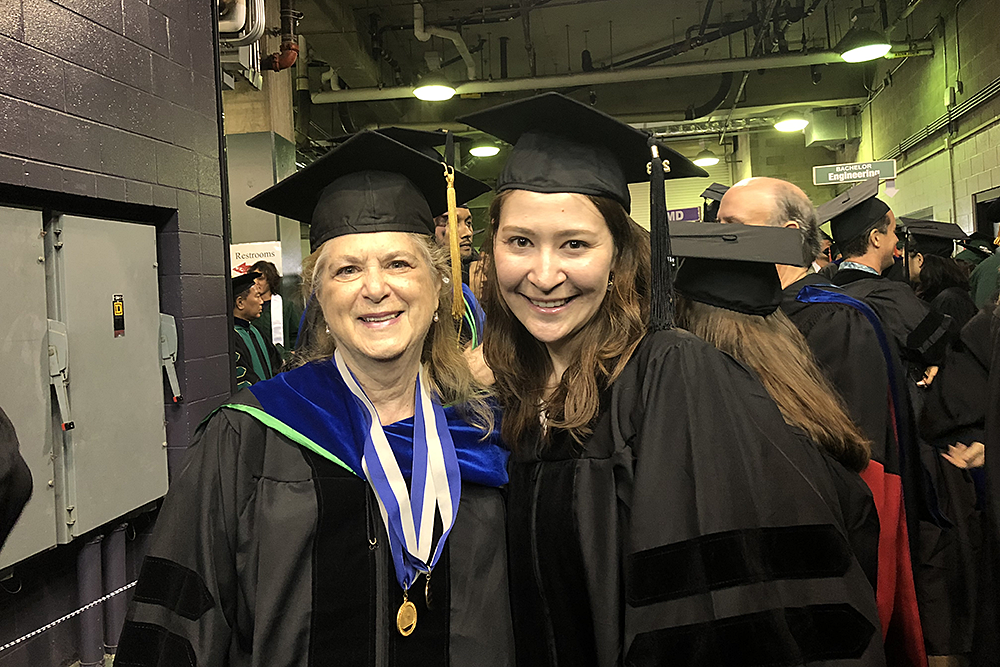
PhD awarded at the commencement;
earned under the guidance of the late Professor Diane Taylor
I was based in Hawaiʻi, but I would go to Cameroon for a few months every year to do research and train young researchers.
I worked with local researchers and staff to collect blood and placental samples from pregnant women. But the cultural context for delivery and recovery is completely different from Japan or the US, and the timing was critical. Village women would get up a few hours after giving birth and walk for hours back home, carrying their newborn on their back. They would take their placenta with them and bury them in their villages; I was told it's considered bad luck otherwise.
Sample collection required very strong relationships with local staff. You have to build rapport; without that, the research cannot be completed. It's all teamwork and respect.
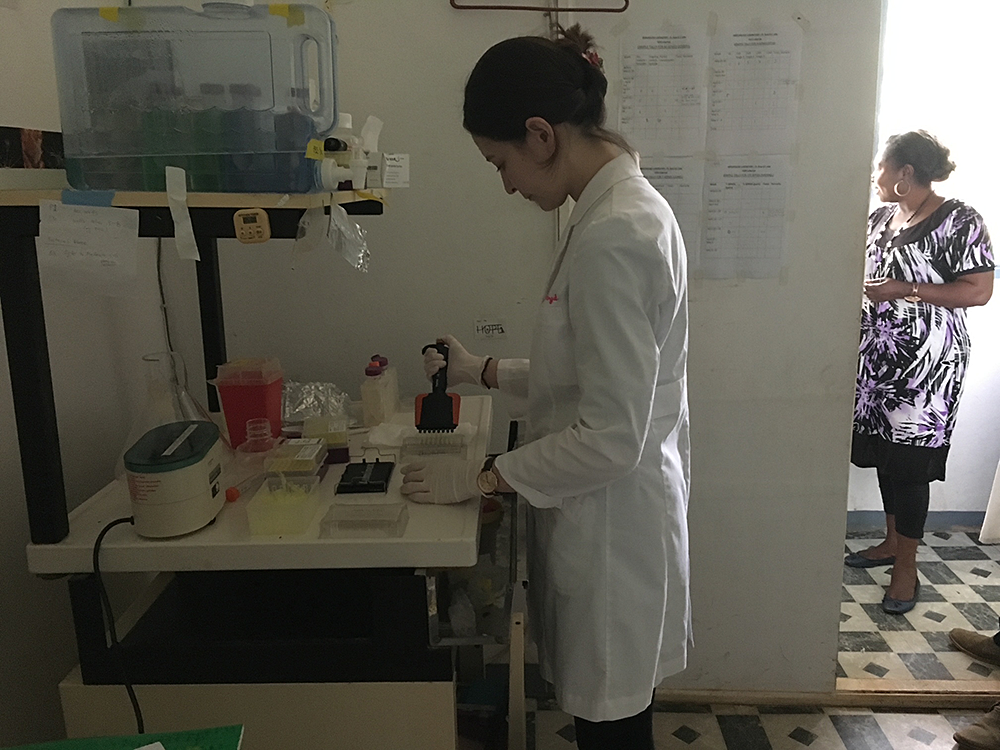
Preparing samples for Luminex assays at the biotechnology center
of the University of Yaoundé I in Cameroon during a power outage
This all comes back to my passion for translational research. It sounds simple, but there are so many barriers from discovery to clinical studies to registration to actual field implementation.
An important issue often overlooked (in Japanese, we have a word mottainai, meaning "what a waste") is when you have excellent research and a great product, but it's not accepted in the field. Maybe it's not culturally appropriate, or communities see it as something external. Or you went through the wrong pathway. In Cameroon and many other countries, oftentimes you cannot just bring government officials and start top-down. You have to talk to the community leader first to get their blessing, who will then talk to the community.
My experience taught me about these pathways. When I started at GHIT, the pieces came together. We know proposals are rarely as simple as they seem. We can anticipate barriers partners might hit and how we might help. Once projects are awarded, we try to understand what challenges they'll likely face.
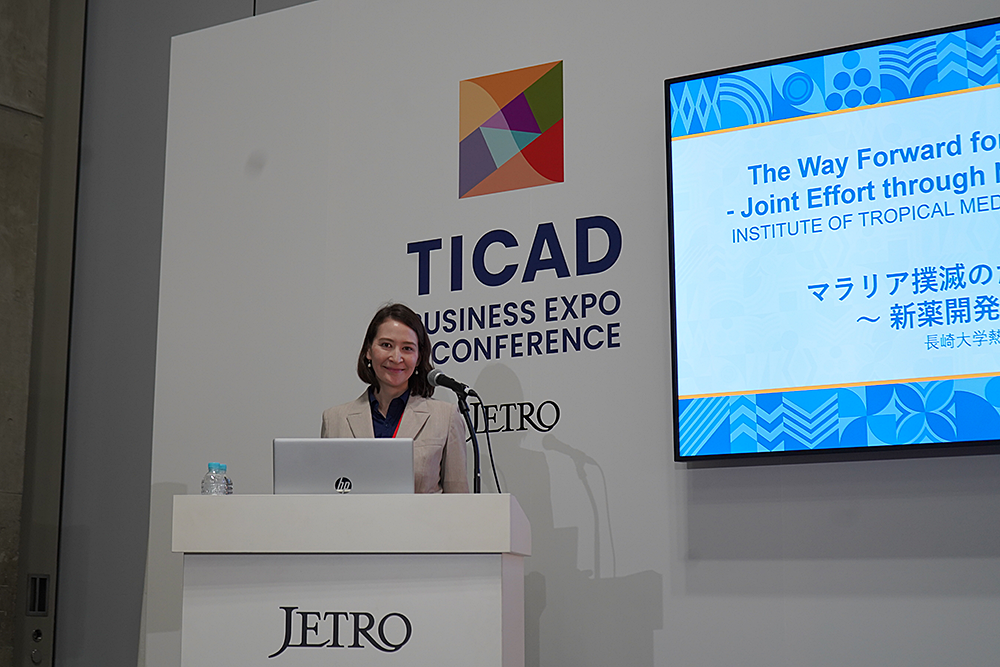
Speaking during a thematic session
at the Ninth Tokyo International Conference on African Development (TICAD 9)
I applied for a paid internship at UNICEF to help fund my final PhD semester and ended up in Lao PDR, working in the maternal and child health sector focusing on immunization and data analysis, when the country was in preparation for introducing rotavirus and HPV vaccines. That's when I realized I could pursue paths beyond becoming a postdoc.
Lab work can be very lonely; I'd started talking to my parasites in culture! I like talking to people, and I thought it was mottainai to keep science within the science community. You need to communicate and implement. That work opened my eyes to this possibility.
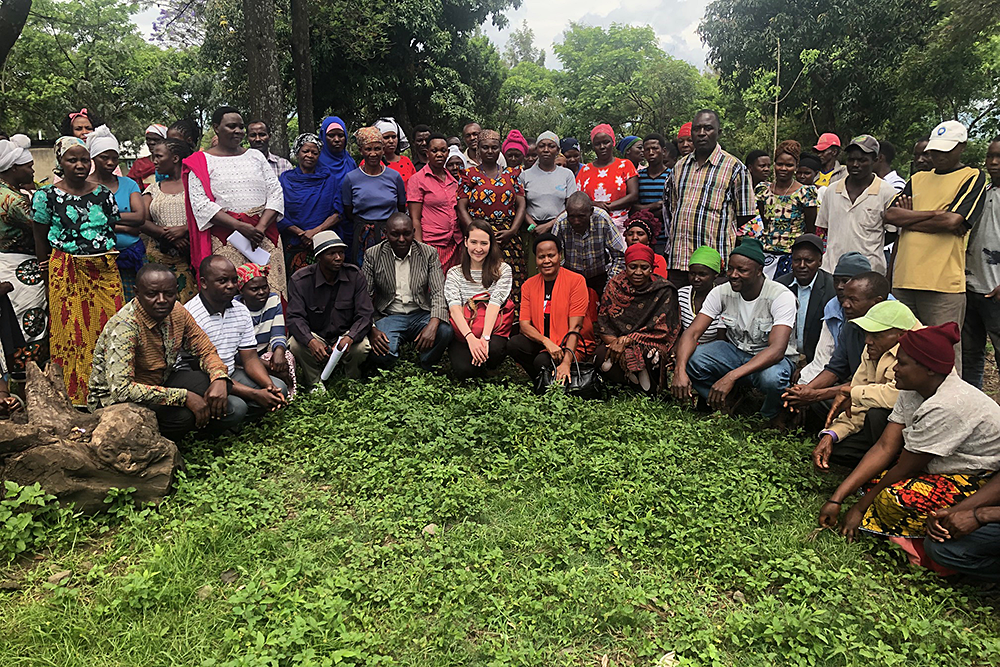
During an outreach activity in Tanzania while at JICA
A few months after I submitted my dissertation, JICA offered me a position in Tanzania, which was fantastic. I experienced how to conduct needs-based surveys and saw the gap between what was discussed at the central and the actual situation at the community level. After the pandemic, I had an opportunity to work in the Democratic Republic of Congo at the National Institute of Biomedical Research (INRB) for a disease surveillance project. Living and working in three very different African countries showed me just how much diversity exists, not just between countries, but within them. The differences in mindset, values, languages, lifestyles, and perceptions of healthcare are profound. Each community has its own context.
You have to understand local realities when implementing a strategy or treatment. You have to adapt to match the community. I used to think too simplistically about this. Working across these contexts taught me how naïve I was. Language is just the beginning: cultural context, community structures, and local perspectives shape everything.
I then came back to Japan to work in a private company, and it was an eye-opening experience. In academia and the public sector, everything tends to be more manual and slower. At IQVIA, we had really efficient systems. I learned a lot about the lifecycle of a drug and the role of real world data and the power of evidence obtained through it. I gained valuable skills I leverage at GHIT now.
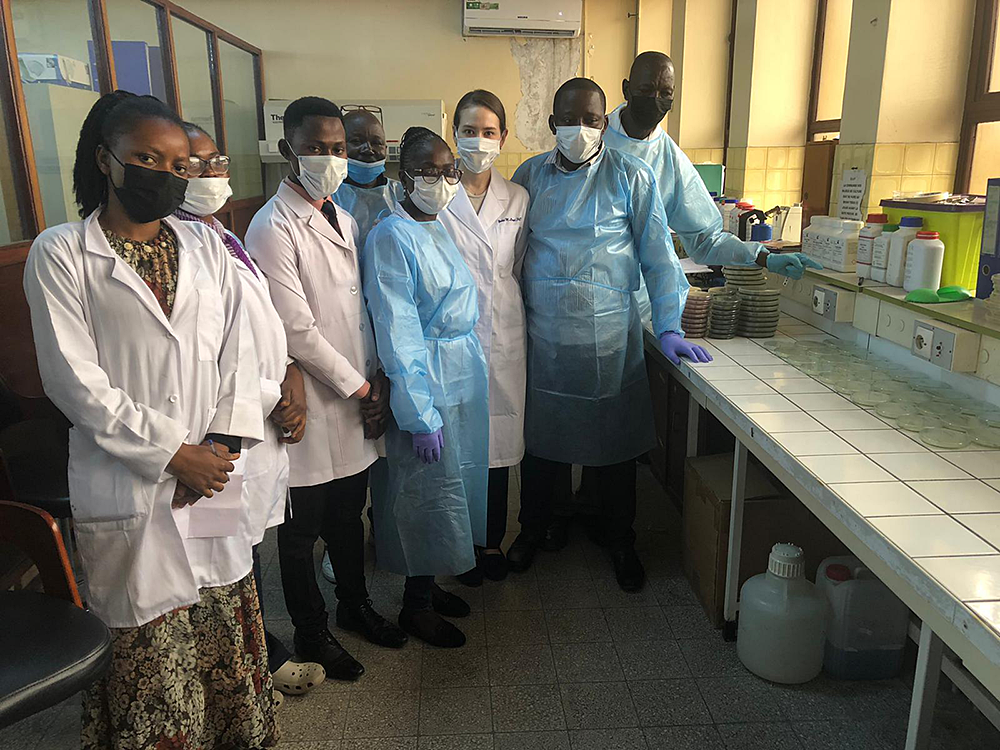
At the laboratory of the National Institute of Biomedical Research (INRB)
in the Democratic Republic of the Congo
During the COVID pandemic, GHIT held many online sessions, and I was aware and had a lot of respect that they were putting in great effort to advance product development in this area.
Joining GHIT was a bit of serendipity, but it all made sense - it all came down to my passion for translational research.
I had also been doing a lot of self-reflection: Did I want to stay in academia? Did I want to be in the field? How can I use these skills? That's why I try to mentor a lot of female researchers who are struggling to find out what they can do. Being a researcher, you're really in a small space, and it's often really hard to see the path beyond becoming a researcher in academia or industry.
But life is not just that. You can use your skills to do anything you want if you just go for it. It goes back to being really proactive and looking for opportunities. If there's an opportunity, just go for it. You only live once. Even if you feel like it might not work, it sometimes does.
*This interview was conducted in October 2025.
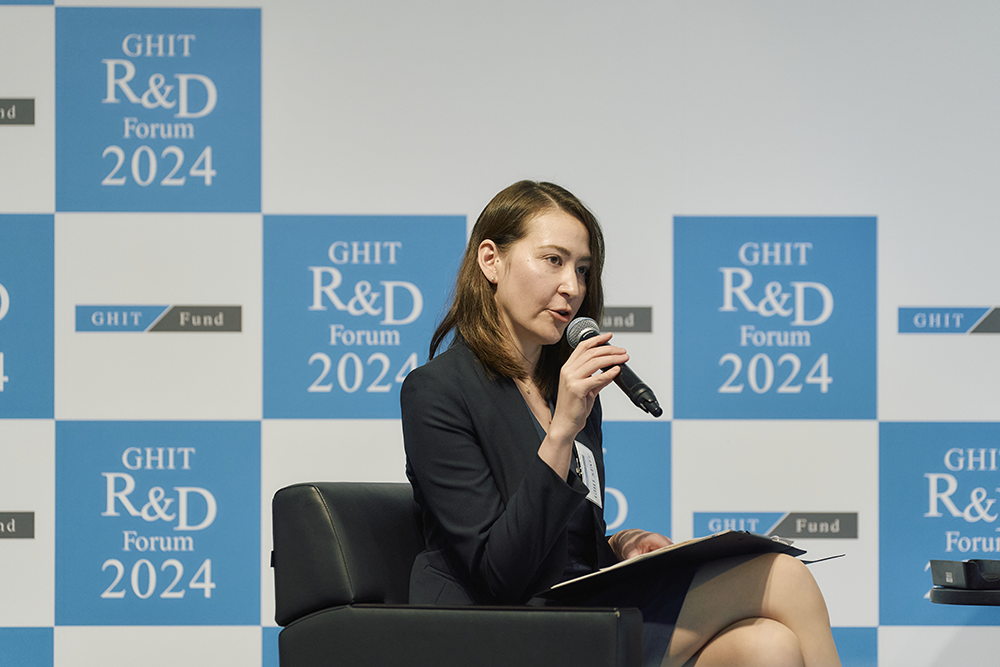
Served as a moderator at the GHIT R&D Forum 2024
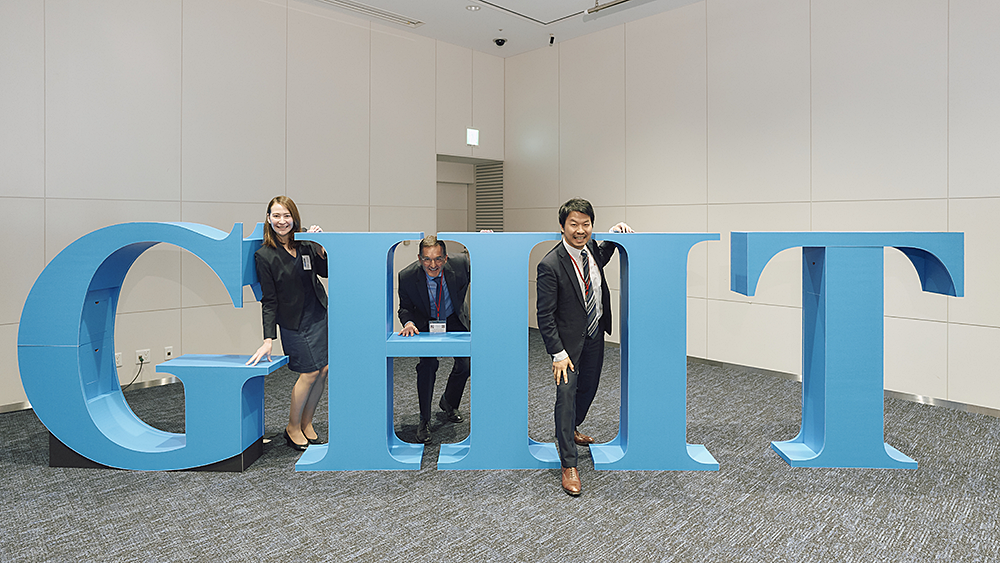
At the GHIT R&D Forum 2024 with panelists
Investment Management, Investment for Impact
After working on infectious disease projects in Lao PDR, Tanzania and the Democratic Republic of Congo with UNICEF and JICA, Yukie joined GHIT in June 2024 following experience in the private sector. As Senior Manager of Investment for Impact, she oversees the full investment cycle, from RFP to post-investment management. Drawing on her background in immunology and vaccine research on dengue and placental malaria, she is mainly in charge of vaccines and diagnostics projects. Yukie earned her B.S. from Kitasato University, conducted research at the Institute of Medical Science, the University of Tokyo, and obtained her PhD in Biomedical Sciences (Tropical Medicine) from the University of Hawaiʻi at Mānoa.
*Affiliation and position are as of the time of the interview.
STORY INTERVIEWS

Yukie Michelle Lloyd, PhD
Senior Manager,
Investment Management,
Investment for Impact

Satoshi Horiuchi
Senior Manager
External Affairs &
Corporate Development

Cecilia Chui, PhD
Senior Manager,
Portfolio and Access Strategy,
Investment for Impact

Mina Ohata
Manager
Investment Strategy
Planning & Management

Staff Dialogue
GHIT's Diverse Culture
A Decade of History and
Diverse Approaches to Work
*Affiliation and position are as of the time of the interview.