News
[Tanzania: Implementation study site report] Tackling Schistosomiasis in the STEPPS Project
In a fight against schistosomiasis among preschool-aged children, the GHIT Fund has invested more than 1.8 billion Japanese yen (approximately 11 million USD*) to support the Pediatric Praziquantel Consortium in developing a pediatric formulation of praziquantel, the standard-of-care treatment for the disease. In recent years, the Consortium has achieved critical global milestones such as WHO prequalification and inclusion in the WHO Model List of Essential Medicines for Children.
Alongside these achievements, implementation studies have been underway to support country-level program design and decision-making. Tanzania is among these countries. The Tanzanian National Institute for Medical Research (NIMR) is leading an implementation study, with support from the Government of Japan and Access and Delivery Partnership, an initiative led by the United Nations Development Programme (UNDP). With the study progressing to its critical milestone, domestic and international partners were invited to witness the launch of the delivery of pediatric treatment in February 2026.
Schistosomiasis is an acute and chronic parasitic disease caused by blood flukes of the genus Schistosoma. According to the World Health Organization, over 250 million people required preventive treatment globally in 2024, with nearly 94% of the burden in Africa. Transmission occurs when individuals contact freshwater infested with parasite larvae shed by intermediate-host snails. Ingested or skin-penetrating larvae mature into adult worms, and their trapped eggs trigger damaging immune responses. The disease causes chronic intestinal or urogenital pathology. Children are highly vulnerable, suffering anemia and stunting, making targeted pediatric treatments essential for elimination.
About schistosomiasis
Source: WHO https://www.who.int/news-room/fact-sheets/detail/schistosomiasis
Tanzania’s response to schistosomiasis
Tanzania is one of the countries where schistosomiasis is highly endemic. Based on the country's Neglected Tropical Diseases (NTD) Strategic Master Plan (2021–2026), schistosomiasis remains a major public health priority. The plan highlights the Lake Zone (the Lake Victoria basin) as carrying a particularly heavy infection burden. Children are among those affected due to bathing and recreational activities. The country’s response includes mass drug administration of praziquantel to school-aged children. However, this strategy has not reached preschool-aged children, who are also affected by the disease, due to the lack of an appropriate drug formulation.
The STEPPS project
As the development of a pediatric formulation of praziquantel progressed, the GHIT Fund worked with the Access and Delivery Partnership to support Tanzania in preparing its health system to adopt the new solution once it became available. As part of these efforts, NIMR initiated the project “Strengthening capacity for delivery and uptake of pediatric praziquantel for schistosomiasis in Tanzania” (STEPPS) across three phases. The first phase involved building a national consensus on introducing and delivering pediatric praziquantel in Tanzania. The second phase involved developing tools for delivering the treatment to preschool-aged children. The final phase involved investigating two delivery models: a test-and-treat approach in which the drug is administered based on test results, and mass drug administration in which the drug is administered to all eligible children.
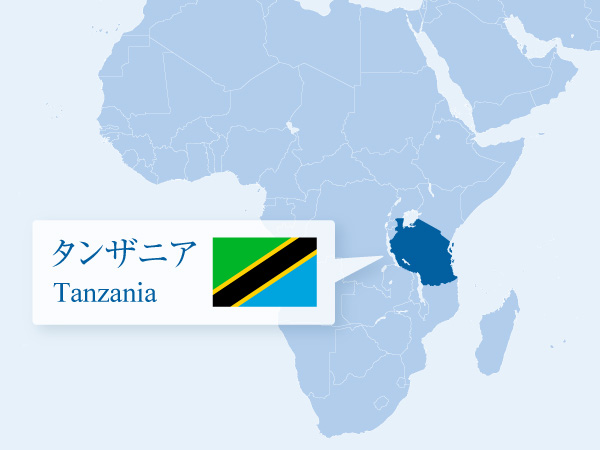
The STEPPS project in Tanzania
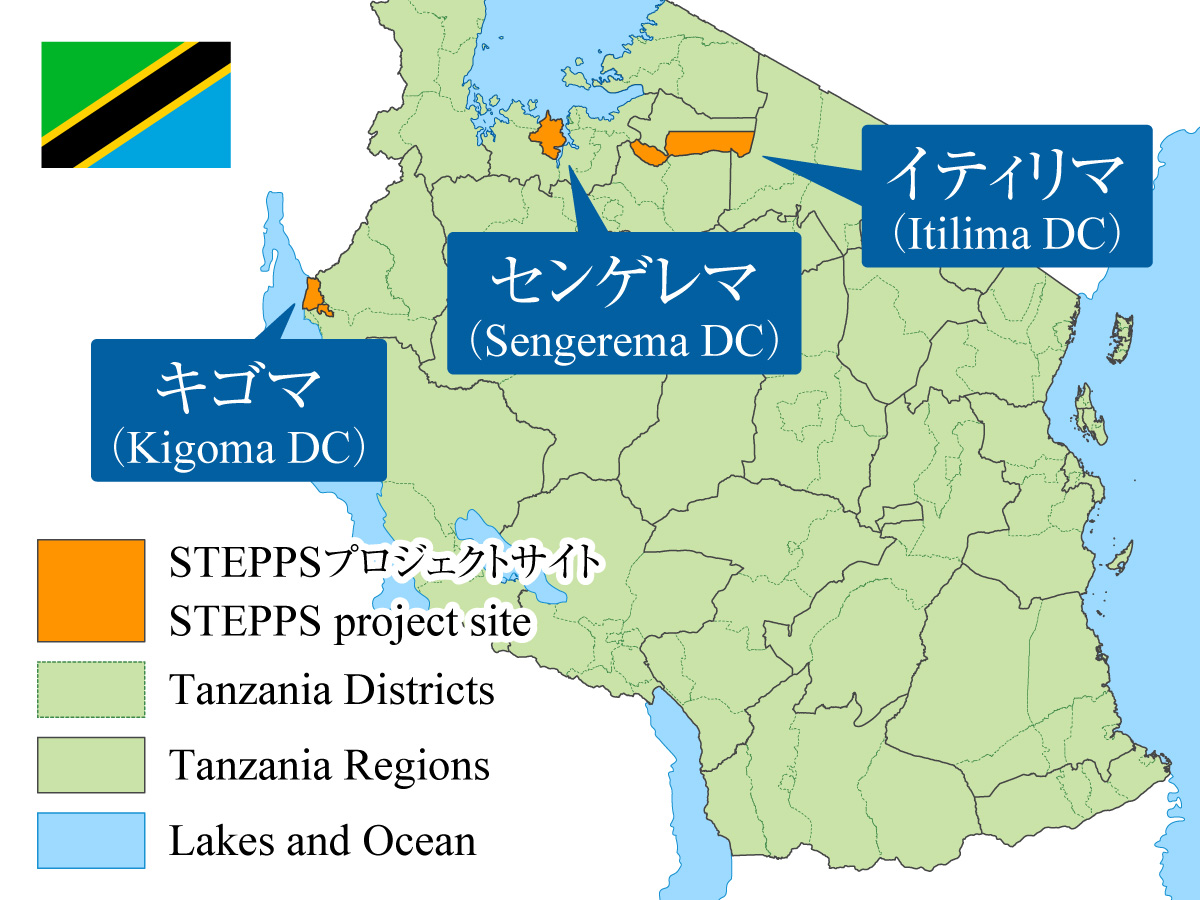
Location of Mwanza, Tanzania with the STEPPS project sites highlighted in orange.
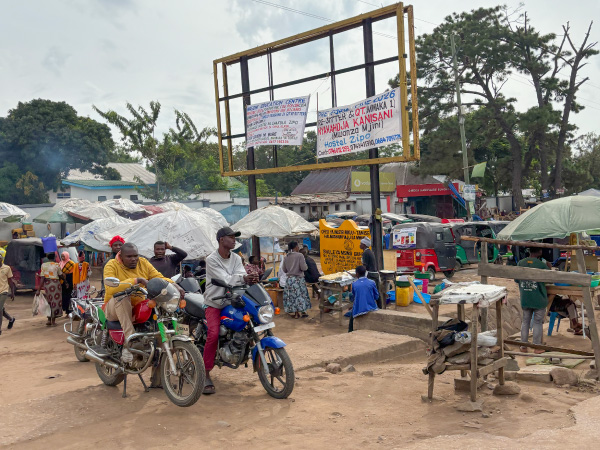
After arriving in Mwanza, the mission team traveled by bus to the Sengerema Health Center.
Field Mission
It was the launch of drug delivery in phase three of the STEPPS project when the GHIT Fund, among other stakeholders, was invited to a site visit and a workshop in Mwanza, Tanzania's second-largest city on the southern shores of Lake Victoria. On day 1, the project team visited the Sengerema Health Center to observe a demonstration of the test-and-treat approach. The project team, together with children and their families, showcased the test-and-treat process, from initial consultation and diagnostic testing to treatment administration.
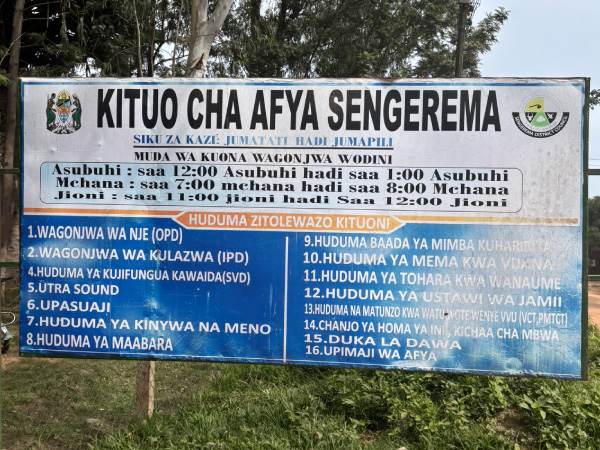
Sign for Sengerema Health Center.

Sengerema Health Center. Photo Credit:UNDP/Kumi Media

Demonstration of a consultation with a child and his mother. Photo Credit:UNDP/Kumi Media

Demonstration of the diagnostic process using a urine test. Photo Credit:UNDP/Kumi Media
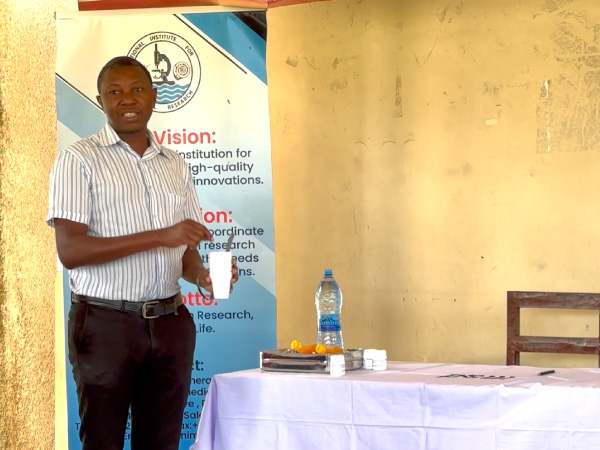
Explanation of the drug administration process.
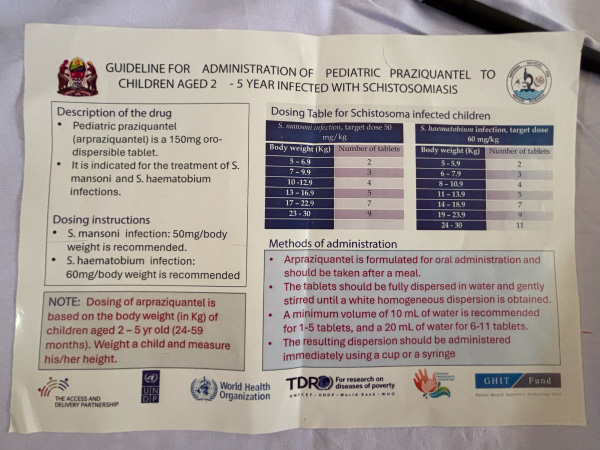
Guideline material for drug administration developed during the second phase of the project.
Stakeholder Workshop
Various stakeholders gathered on day 2. The objectives of the workshop were to officially launch the delivery of Stakeholder Workshop pediatric praziquantel under the STEPPS project in Tanzania, to provide a platform for partners and officials from the government of Tanzania to deliberate the strategies for the programmatic rollout and scale-up in the country, and to strengthen stakeholders' collaboration and partnership, which will accelerate the rollout of pediatric praziquantel in Africa. The workshop started with a presentation of an overview of the STEPPS project by Dr. Paul Kazyoba, Chief Research Scientist and Former Director of Research Coordination and Promotion at NIMR. His speech reflected on the history of the collaboration between Tanzania and the Access and Delivery Partnership, and on each phase of the STEPPS project leading up to the drug delivery launch. The workshop demonstrated the government of Tanzania's recognition of the project's efforts when Dr. Seif Abdallah Shekalaghe, then Permanent Secretary of the Ministry of Health, delivered his speech. A box-opening ceremony followed to inaugurate the official launch.
For communities around Lake Victoria, the launch of the pilot study meant that the government of Tanzania is paving the way for the rollout of pediatric treatment programs for preschool-aged children, with the potential to help them become healthier and achieve better growth. The Citizen, a leading media outlet in Tanzania, featured the event, reporting the country’s leading role in closing a long-standing treatment gap for the preschoolers.
As of August 2026, the STEPPS project has reached over 10,000 children with pediatric praziquantel through the test-and-treat approach and mass drug administration for preschool-aged children, toward an overall target of more than 25,000 children. The workshop was important in building momentum for robust execution of the critical phase of the project. It also marked a historic milestone in expanding schistosomiasis treatment to children under the age of six years, who were previously excluded from the treatment program due to the lack of an appropriate drug formulation.
For the GHIT Fund, engaging with a broad range of stakeholders, including through missions like this one, is critical in ensuring that GHIT-supported innovations reach those in need equitably and sustainably. The GHIT Fund sincerely appreciates the efforts of all who contributed to reaching this milestone and supporting the journey ahead.
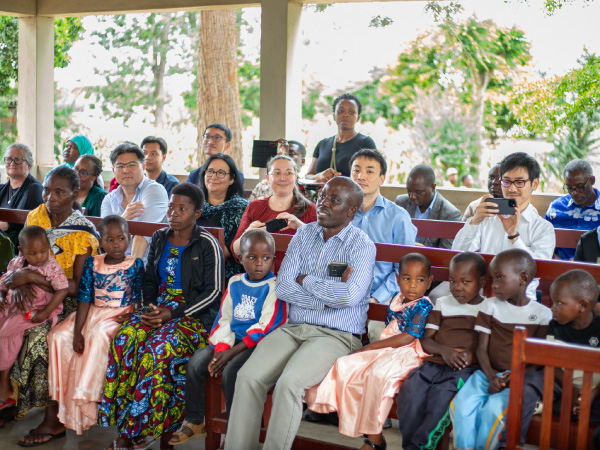
Mission team observing the demonstration with Dr. Paul Kazyoba, local children, and their parents. Photo Credit:UNDP/Kumi Media
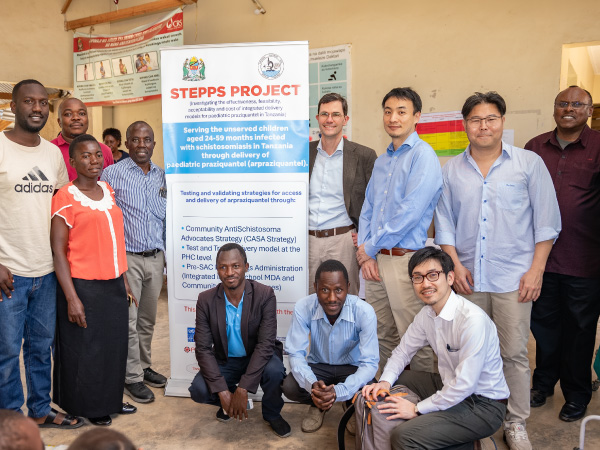
After the demonstration session, the mission team took a photo with the Community AntiSchistosoma Advocates (CASA) and with the STEPPS project banner. Photo Credit:UNDP/Kumi Media
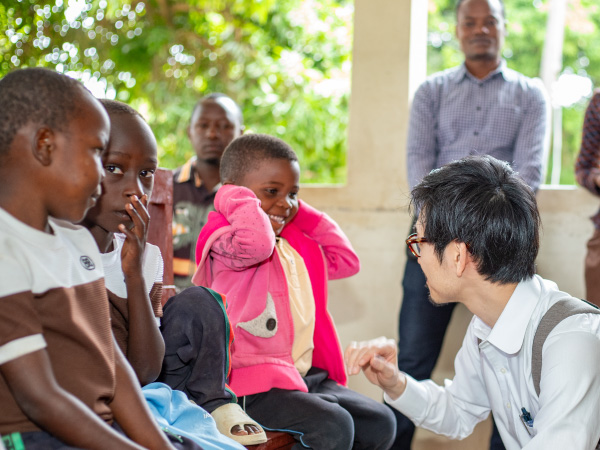
A moment with local children. Photo Credit:UNDP/Kumi Media
 シェカラゲ博士による挨拶 Photo Credit_UNDP_Kumi Media_.jpg)
Remarks by Dr. Seif Abdallah Shekalaghe, then Permanent Secretary of Ministry of Health. Photo Credit:UNDP/Kumi Media

Box Opening ceremony. Photo Credit:UNDP/Kumi Media

One scene of the panel discussion.
*USD 1 = JPY 160.03, the approximate exchange rate on Aug 31, 2026.