News
Report on study sites in Thailand: Collaborative Efforts with Mahidol University toward Control of Vivax Malaria
The GHIT Fund is an international organization that supports research and development (R&D) for malaria and neglected tropical diseases (NTDs). Promoting partnerships with research institutions, academia, and medical and pharmaceutical companies in low- and middle-income countries (LMICs) is a core strategic objective under its third five-year plan, “GHIT3.0,” which began in fiscal year 2023.
In mid-October 2025, Senior Manager Satoshi Horiuchi and Manager Hiroki Shibata of GHIT Fund’s External Affairs & Corporate Development visited the Faculty of Tropical Medicine at Mahidol University in Thailand, a GHIT Fund collaboration partner. They toured the faculty’s campus research facilities to learn about conditions in areas where malaria and dengue infections are endemic, the circumstances of local communities, and the state of medical institutions. They also visited Tha Song Yang in Tak Province near the border with Myanmar. There, they observed the realities of the medical care being provided in local clinics in remote areas and the state of malaria and dengue community countermeasures.
The vivax malaria situation and the importance of vaccine development
Vivax malaria is an infectious tropical disease widespread in Thailand and other Southeast Asian countries. This disease is difficult to eradicate because of its cyclical nature, with parasites lying dormant (hypnozoites) in the liver and later resuming activity, causing relapses. The key to long-term countermeasures has been the development of vaccines that target liver-stage parasites and reduce relapse risk. The GHIT Fund is supporting a vivax malaria vaccine development project being conducted jointly by Mahidol University, Chulalongkorn University and Ehime University.
Facilities of Mahidol University Faculty of Tropical Medicine
Mahidol University Faculty of Tropical Medicine is known around the world for its research in various tropical diseases, such as malaria, dengue, schistosomiasis, and intestinal parasitosis. It engages in a wide range of clinical research, basic research, and field research.
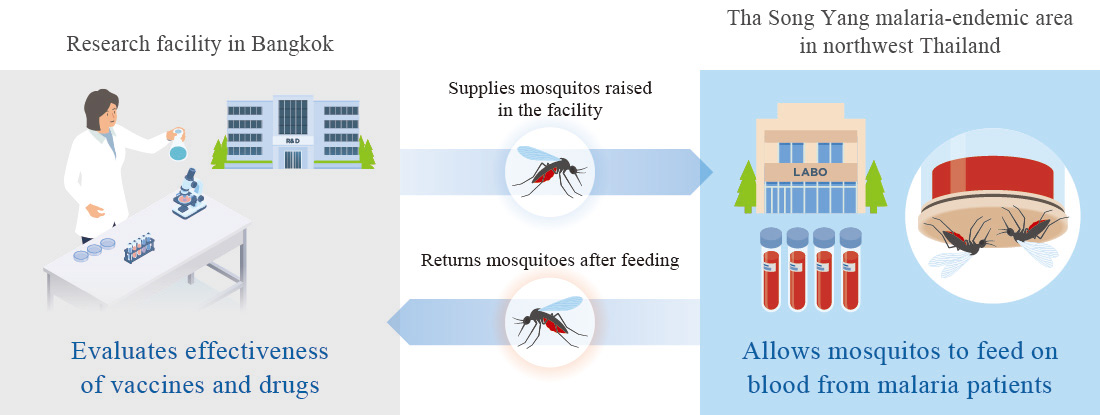
Its research facility in Bangkok includes an "insectary" where mosquitoes are reared and maintained under controlled conditions. Laboratory mosquitoes are raised from eggs, with larval and adult stages managed separately. Once a week, mosquitoes are transported to Tha Song Yang, a malaria-endemic area, as part of controlled research protocols. There, they are allowed to feed on blood samples obtained from malaria patients and are then returned to the research facility in Bangkok. Through this process, researchers study how malaria parasites develop within mosquitoes and spread disease, and evaluate the efficacy of vaccines and antimalarial drugs.
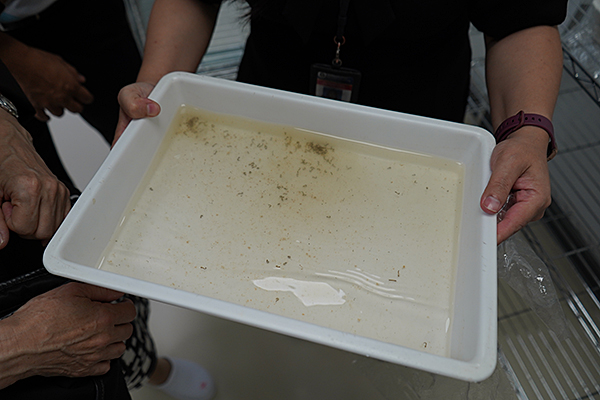
Mosquito larvae raised for research purposes
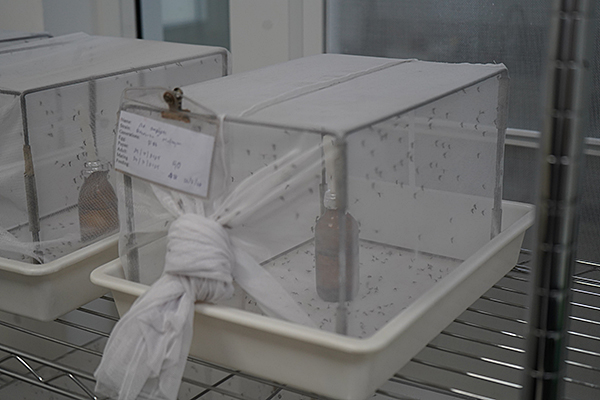
Adult mosquitoes
The university also maintains colonies of snails that serve as intermediate hosts for schistosomiasis, sourced from Africa and the Mekong Basin, as well as fish species that prey on these snails. These resources support research into the living environments of parasites, transmission pathways, and potential control strategies. Through this work, Mahidol University contributes to the development of parasitic disease control measures not only in Thailand but also across broader regions, including Asia and Africa.
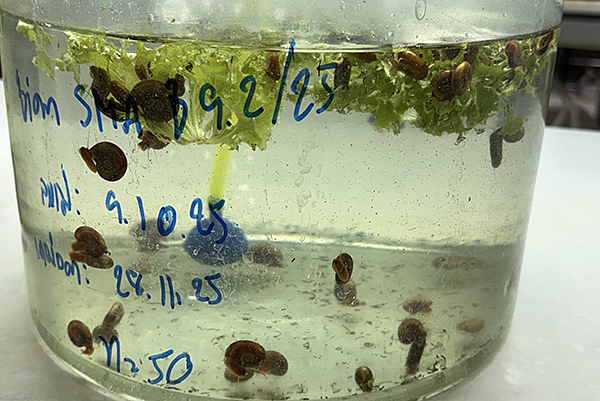
Snails taken from the Mekong River
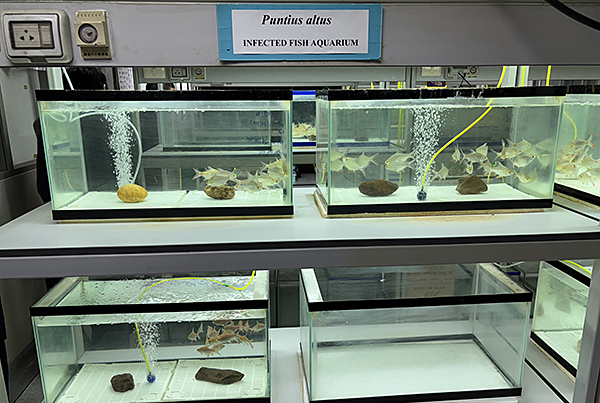
Snail-eating fish raised in tanks to replicate aquatic ecosystems for infection route discovery
Field research and community healthcare in Tha Song Yang
Tha Song Yang, located approximately 600 km northwest of Bangkok near the Thai-Myanmar border, is one of Thailand’s main malaria-endemic regions. The surrounding area is home to communities and several refugee camps inhabited by members of the Karen ethnic group who have migrated from Myanmar. Vast rice and corn fields dominate the landscape, and many residents rely on farming for their livelihood. As a result, community members are frequently exposed to mosquitoes, placing the region at high risk for mosquito-borne diseases such as malaria and dengue.
Tha Song Yang is a major research site for the Mahidol Vivax Research Unit (MVRU), which conducts comprehensive malaria research spanning field, laboratory, and translational studies. Researchers use laboratory-reared mosquitoes that are fed on blood samples collected from malaria patients in Tha Song Yang to study parasite development and transmission mechanisms. These efforts generate essential data that support the development of vaccines and antimalarial therapies, including interventions aimed at preventing malaria relapses.
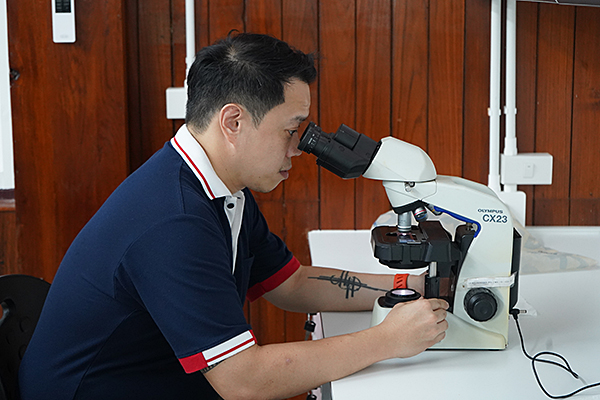
A MVRU researcher observing malaria parasites in red blood cells
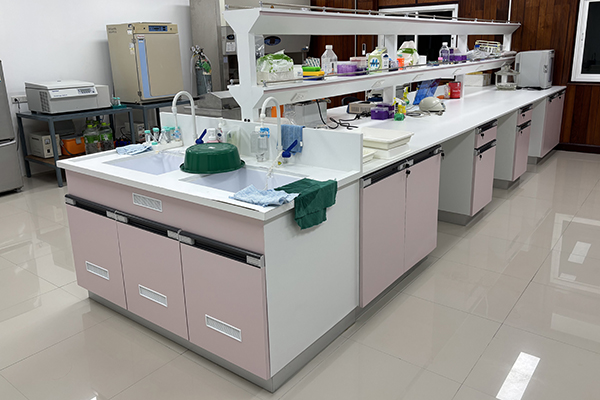
A basic MVRU laboratory in Tha Song Yang, Tak Province
During this trip, Mr. Horiuchi and Mr. Shibata visited a Karen community where Mahidol University conducts field research, Tha Song Yang Hospital, the primary provider of medical care in the region, and a clinic located on the Myanmar side of the border.
Mahidol University works closely with local residents and health authorities to investigate mosquito habitats and collect blood samples for research purposes. These initiatives not only contribute to the advancement of scientific research but also help enhance the effectiveness of infectious disease prevention and control measures for the community as a whole.
While visiting the Karen community, they observed various malaria and dengue awareness-raising activities, such as the use of mosquito nets and posters advocating infection prevention measures, and saw “malaria posts” (basic health clinics located in malaria endemic villages, operated by trained volunteers) where residents with fevers can be tested using diagnostic kits. Individuals who test positive for malaria are referred to hospitals for further treatment. This initial response framework has become firmly established within the community.
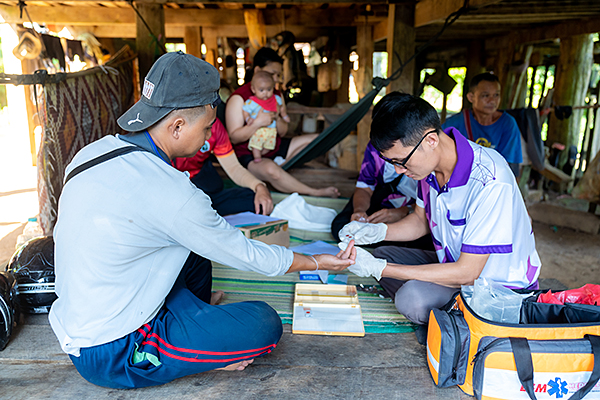
Taking blood samples from members of the community
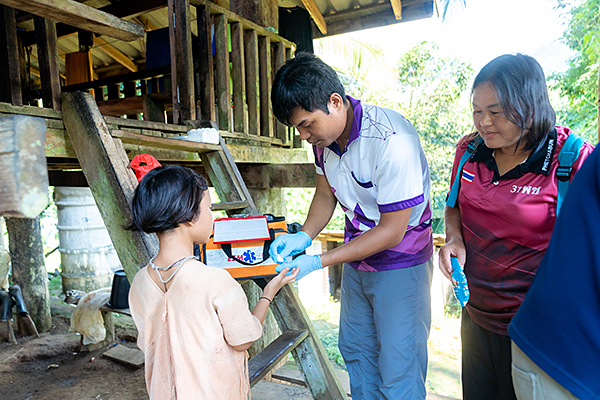
Taking blood samples from members of the community
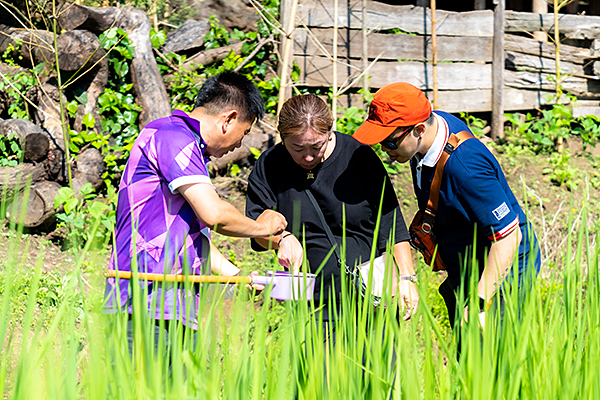
Collecting mosquito larvae
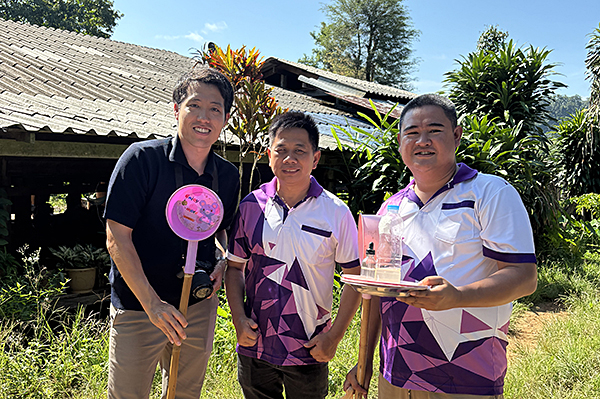
MVRU researchers take the collected mosquito larvae back with them
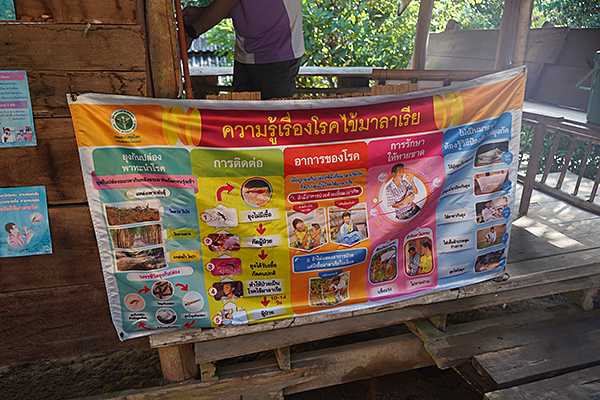
Malaria awareness-raising activities
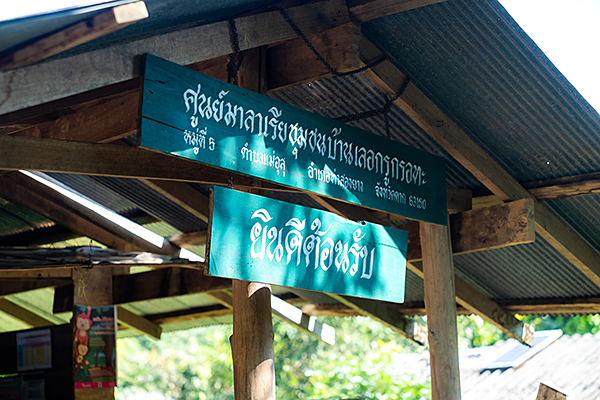
A malaria post
Tha Song Yang Hospital, the district’s largest medical facility and a central provider of community healthcare, is one of Mahidol University’s key partners. Roughly 100,000 people live in the Tha Song Yang area, of whom approximately 30% are non-Thais, including refugees from Myanmar. The hospital provides medical care to all members of the community, regardless of nationality or place of birth.
Mr. Horiuchi and Mr. Shibata also visited a clinic on the Myanmar side of the border. Every day, medical staff from Tha Song Yang Hospital travel by boat across the Moei River, which forms the border between Thailand and Myanmar, to provide medical care to patients at the clinic. Most patients belong to ethnic minority groups such as the Karen, and the malaria situation is more severe on the Myanmar side of the river. Given the frequent cross-border movement of people, diligent treatment and sustained support are essential to preventing the spread of infection.
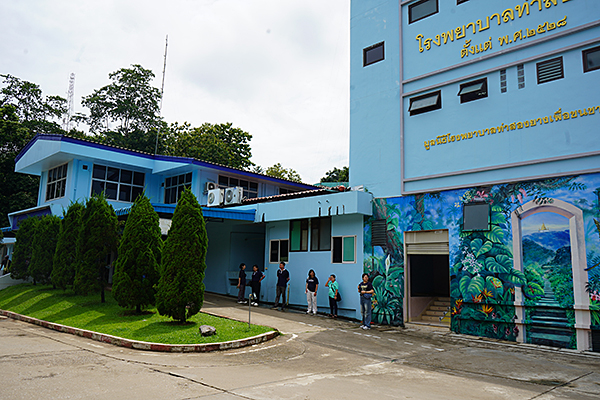
Tha Song Yang Hospital
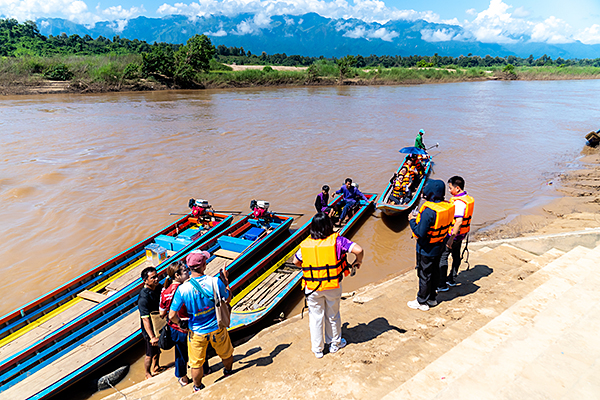
The Myanmar side of the Thai-Myanmar border, as seen from the Moei River that flows between the two countries
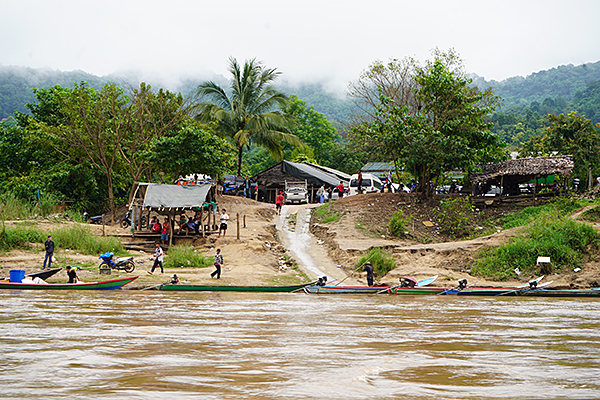
The Myanmar side of the Thai-Myanmar border, as seen from the Moei River that flows between the two countries
However, the clinic’s medical infrastructure, such as operating rooms and the inpatient space, is limited, requiring healthcare providers to deliver care with constrained resources. The clinic operates primarily through volunteer efforts and donations. In recent years, securing sustained support has become increasingly difficult. Although diagnostic kits are occasionally donated, the types of kits vary, making it challenging to maintain a consistent supply. As a result, delays in the diagnosis and treatment of malaria and dengue are not uncommon. Gaining access to medical care is also difficult, as many patients must cross mountains and forests to reach the clinic.
In Tha Song Yang, research and community healthcare are closely linked, and those working to combat infectious diseases continue their efforts despite limited resources. These local initiatives form an essential foundation supporting broader regional and global efforts to eliminate malaria.
The importance of GHIT Fund initiatives, as seen through the field visit
Through this visit, organized with the support of Mahidol University, Mr. Horiuchi and Mr. Shibata were able to assess conditions within the local community and healthcare facilities, gaining a deeper understanding of the challenges surrounding malaria and dengue, including infection risks and disparities in healthcare access. They observed firsthand how basic and clinical research conducted in laboratories is closely connected to field-based activities in Tha Song Yang. The visit underscored the importance of delivering support that is thoughtfully adapted to local medical capacity, infrastructure limitations, and real-world needs.
The GHIT Fund will continue to collaborate closely with local partners, actively advancing R&D initiatives to combat infectious diseases such as malaria and dengue, while also working to reduce healthcare inequities and enhance public health and hygiene in LMICs.